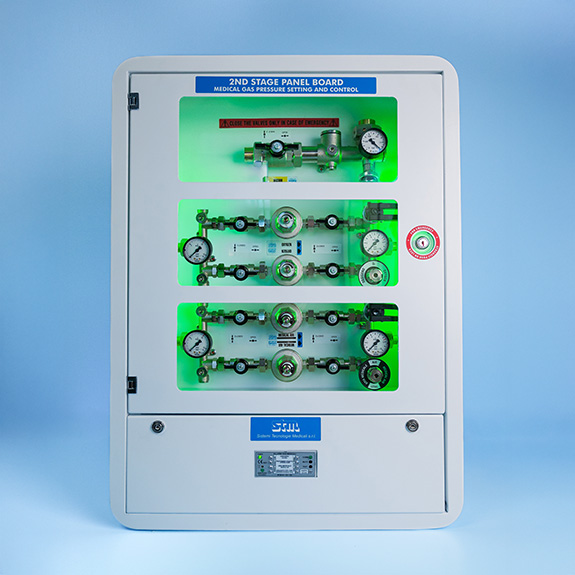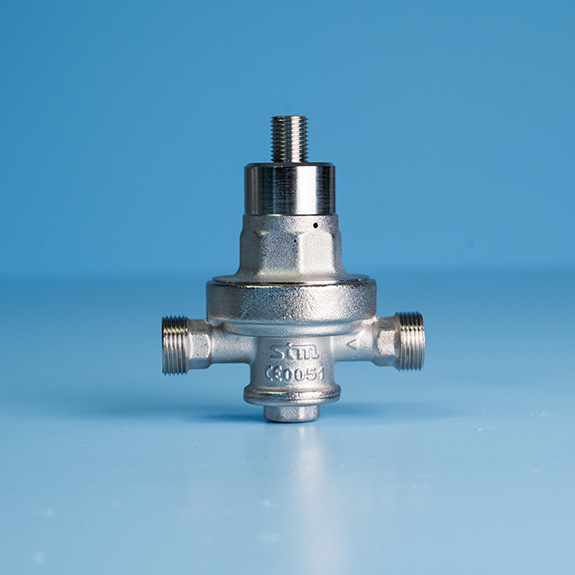

Second-stage pressure regulator panels are designed to reduce and stabilize the pipeline pressure, bringing it to the point-of-use pressure, typically 4 bar for compressed medical gases and 8 bar for instrument air.
Thanks to a bypass configuration specifically engineered to ensure continuity of supply and rapid system recovery, these devices allow reduced intervention times and uninterrupted gas delivery in the event of a pressure regulator malfunction.
These characteristics make the WR series particularly suitable for meeting regulatory requirements applicable to medical gas installations, where the continuous availability of therapeutic gases is considered essential for patient care.
Each second-stage medical gas pressure regulator is selected to ensure reliable performance and safe management of operating pressures.
A version of the second-stage regulator panel is available that integrates, through dedicated valves, the medical gas isolation function for the specific compartment served.
The WRC version allows optimization of space within hospital departments by combining pressure regulation and isolation functions in a single unit.
Pressure anomaly signals generated by pressure switches or pressure transducers for medical gases, as well as signals from vacuum switches in the event of abnormal vacuum system pressure, can be displayed in two ways:
- Directly on the panel, for versions equipped with an integrated alarm control unit;
- Externally, via an acoustic and visual alarm panel installed by the system installer in the vicinity of the regulator panel. When the panel is installed in a technical room adjacent to the served compartment, an additional valve status monitoring control unit must be installed alongside the pressure monitoring unit.
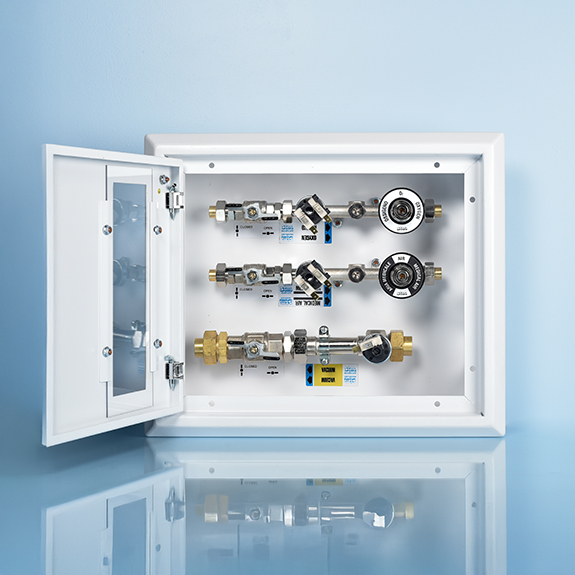
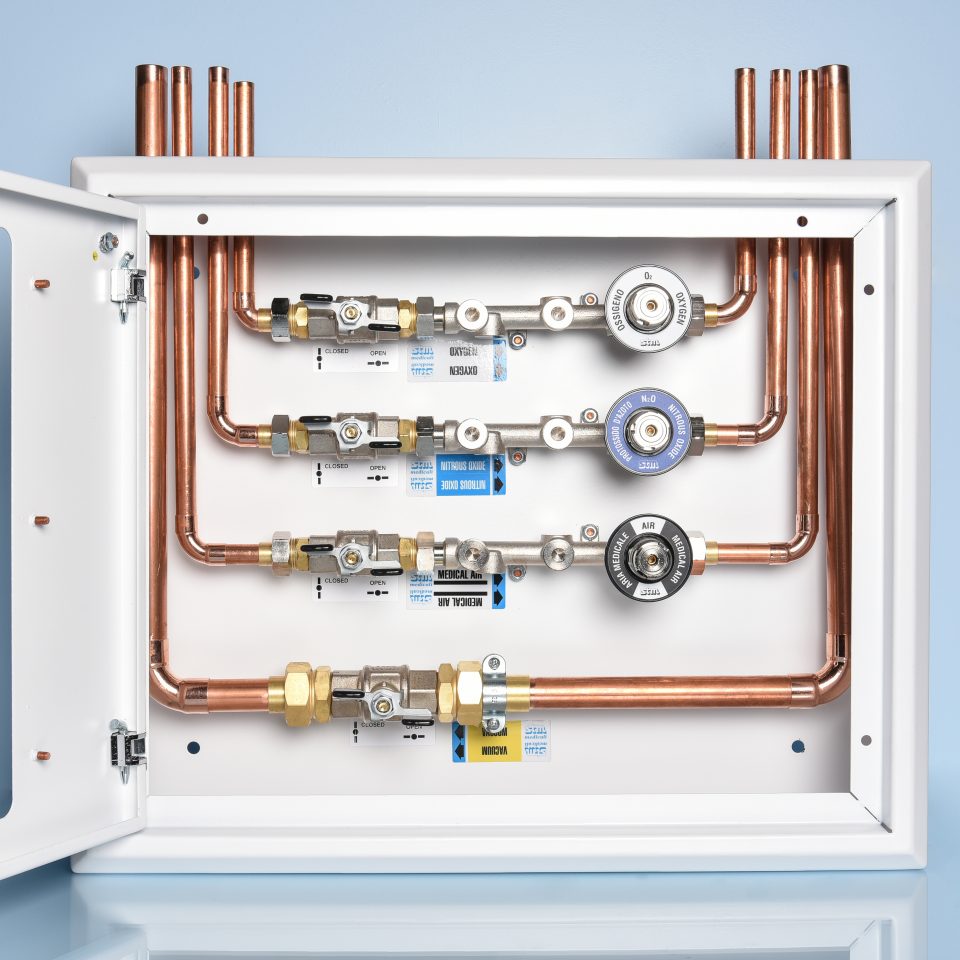
Types of Medical Gas Isolation Panels
Medical gas compartment isolation panels are designed to allow, through dedicated valves, the isolation or supply of medical gases to a specific compartment.
These panels can also support emergency gas supply to the compartment by connecting a cylinder equipped with medical gas pressure regulators of adequate capacity, through a dedicated gas supply point installed downstream of each unit.
Medical gas area isolation panels are medical devices intended to isolate, control and, if required, supply a defined clinical area.
Due to their safety and management function, area isolation panels must be installed downstream of the pressure regulator panels, allowing operation on an already regulated and stabilized pipeline.
In essence, the two panel types share similar control and safety characteristics, differing primarily in their scope of application, from individual compartments to entire clinical areas.
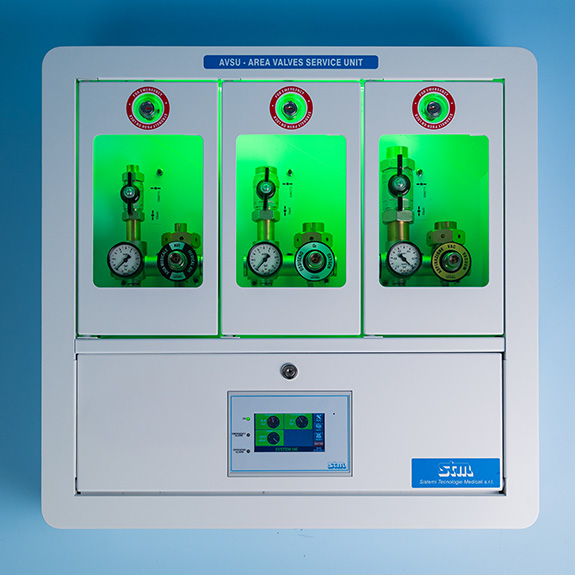
AVSU – Area Valve Service Units
Area Valve Service Units (AVSU) are medical devices designed to isolate, control and, if necessary, supply a specific clinical area.
The system also provides monitoring of pressure anomalies, based on signals from pressure switches or pressure transducers for medical gases and from the vacuum system in the event of distribution network faults.
Alarm signal visualization can be:
- On the AVSU itself, for versions equipped with an integrated alarm control unit
- External to the AVSU, via an acoustic and visual alarm panel installed near the unit by the system installer
When the AVSU is installed in a technical space adjacent to the served area, a valve status monitoring control unit must also be installed in addition to the pressure monitoring unit.